
At The Table
Coming to the table to for deeper conversations about our organization’s philosophy, food access, and what it takes to build a more equitable food system.
Community StoRIes & More
“Yuka and Harvard Law School's Food Law and Policy Clinic found a troubling reality: ‘lower-priced products contain significantly more additives, sugar, and salt, exposing a two-tier food system where access to healthier products is largely reserved for those who can afford them.’”
How We Are Dismantling a “two-tier food system"
“I Don't Want To Think about Survival in Los Angeles Without Hollywood Food Coalition”
Read about Zahlia’s story as a HoFoCo guest, who depends on daily dinners and wellness resources, written by a HoFoCo guest.
By: HoFoCo Guest
WHY I’M HERE: THE MEAL THAT MATTERS MOST
“The reason I’m here, not working somewhere else, not chasing another star, not standing on another line, is because I believe I can make a difference here. We can share ideas here. We can build something better here.”
By: Collin Leaver
Resources
THe Little Pride Cookbook
In celebration of Pride 2026, we put together a little cookbook full of colorful recipes! You can access it digitally, or print it our and fold it into a mini-pocket book (AKA zine). Happy cooking.
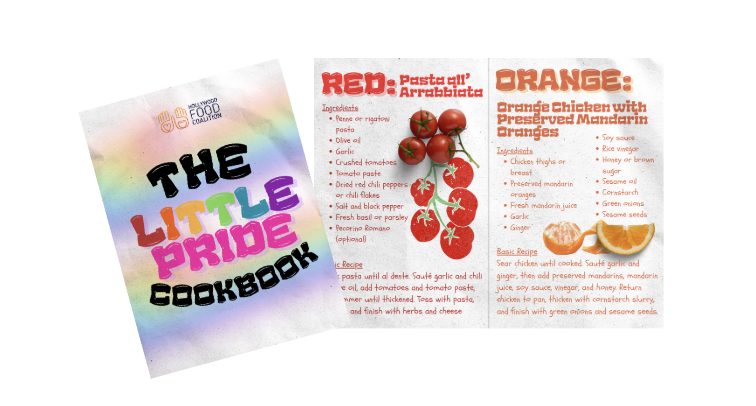
“PDF to print zine at home” (print double-sided, cut on the dotted lines)
Our Impact
Explore MorE
Articles we have referenced in our newsletters, have helped frame our work, and encourage you to explore to gain a deeper understanding about food access in Los Angeles and beyond
”Budget Cuts Threaten Program That Doubles Food Dollars for Californians in Need”
”Food insecurity remains high in L.A. County, but who it affects is changing”
”At Least 1.75 Million Fewer People Are Receiving SNAP Since Trump Took Office”
”SNAP Provisions of the One Big Beautiful Bill Act of 2025 – Information Memorandum”
”California Ramps Up Food Access Efforts — Especially for Older Adults and Those With Disabilities”
Explore our annual impact reports summarizing meals served, food rescued, partnerships, and community programs.
Speaking Engagements & Studies
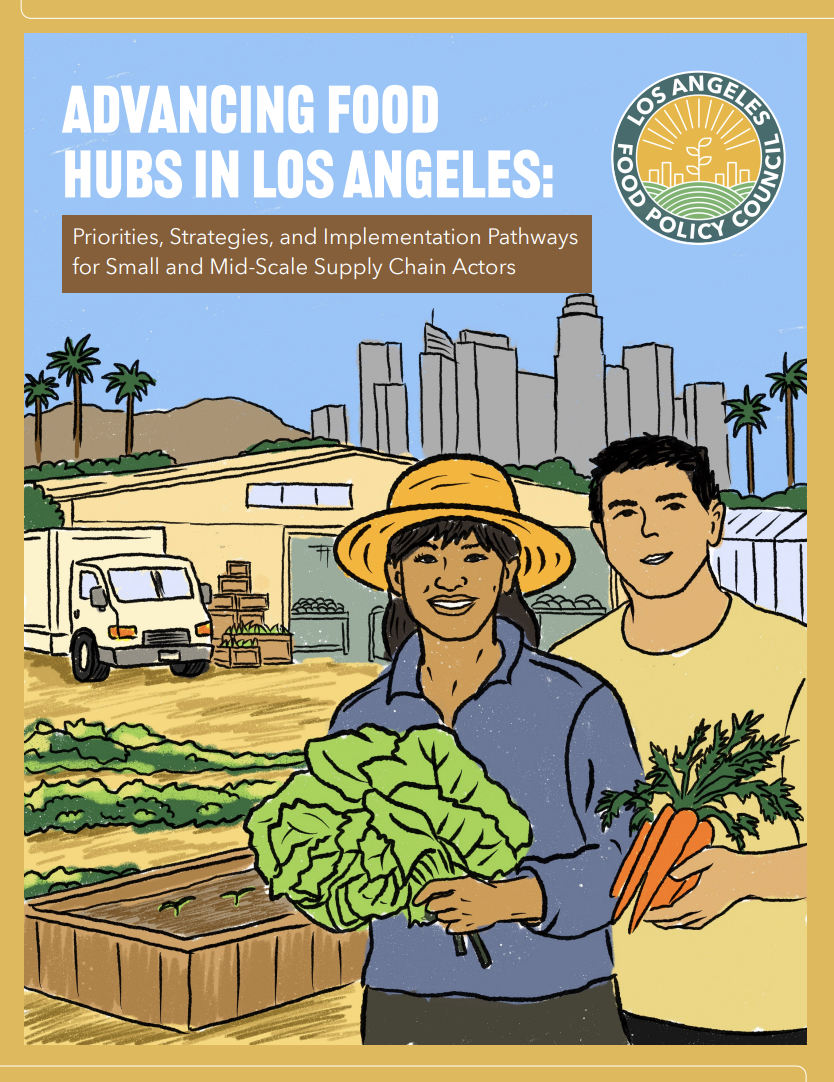
Los Angeles Food Policy Council Report
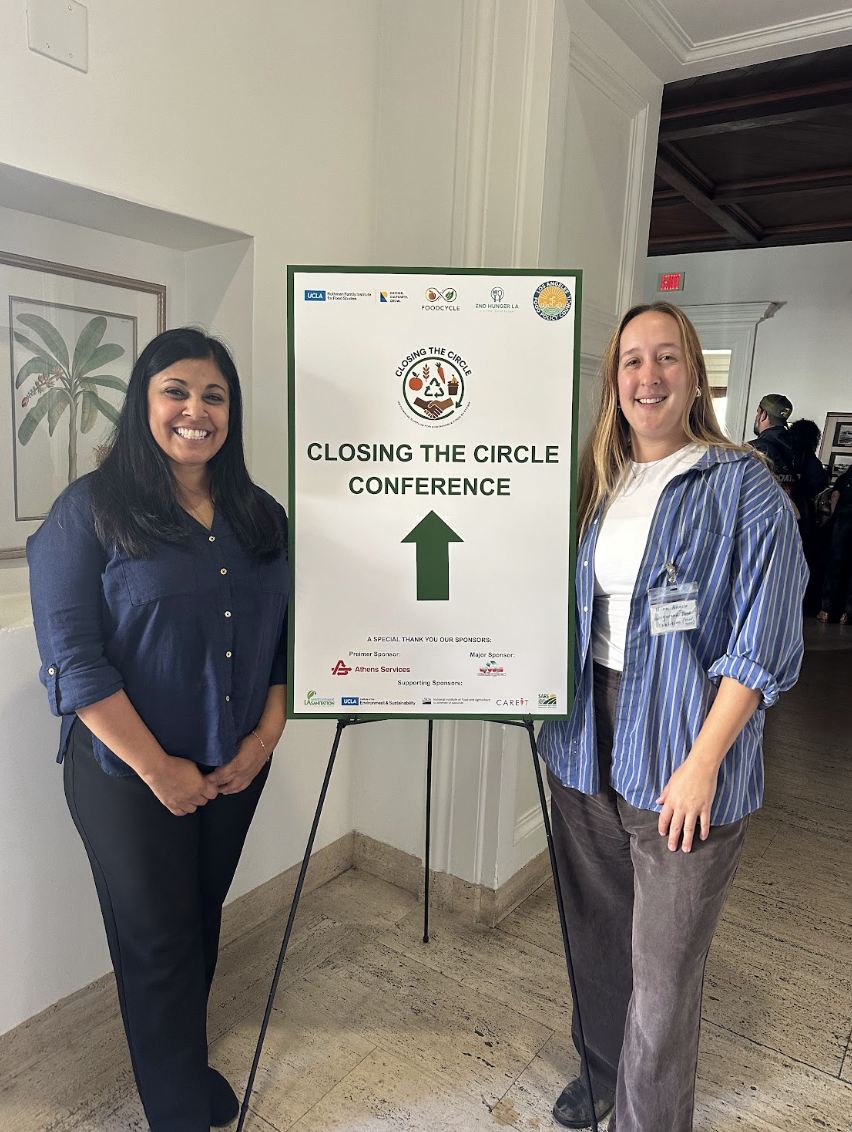
Closing the Circle Conference
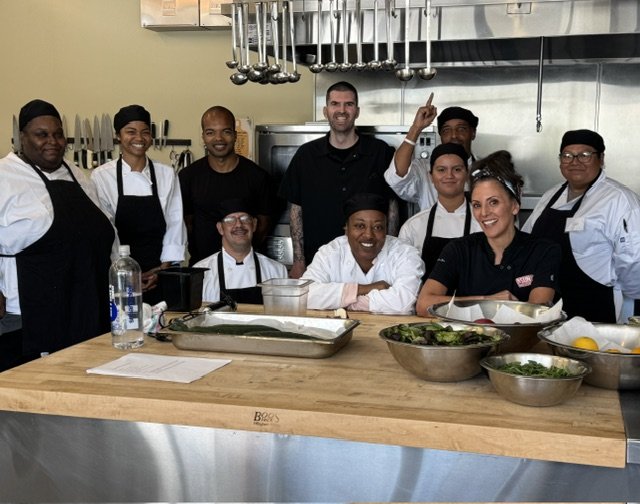
Speaking at Bread & Roses Training Kitchen
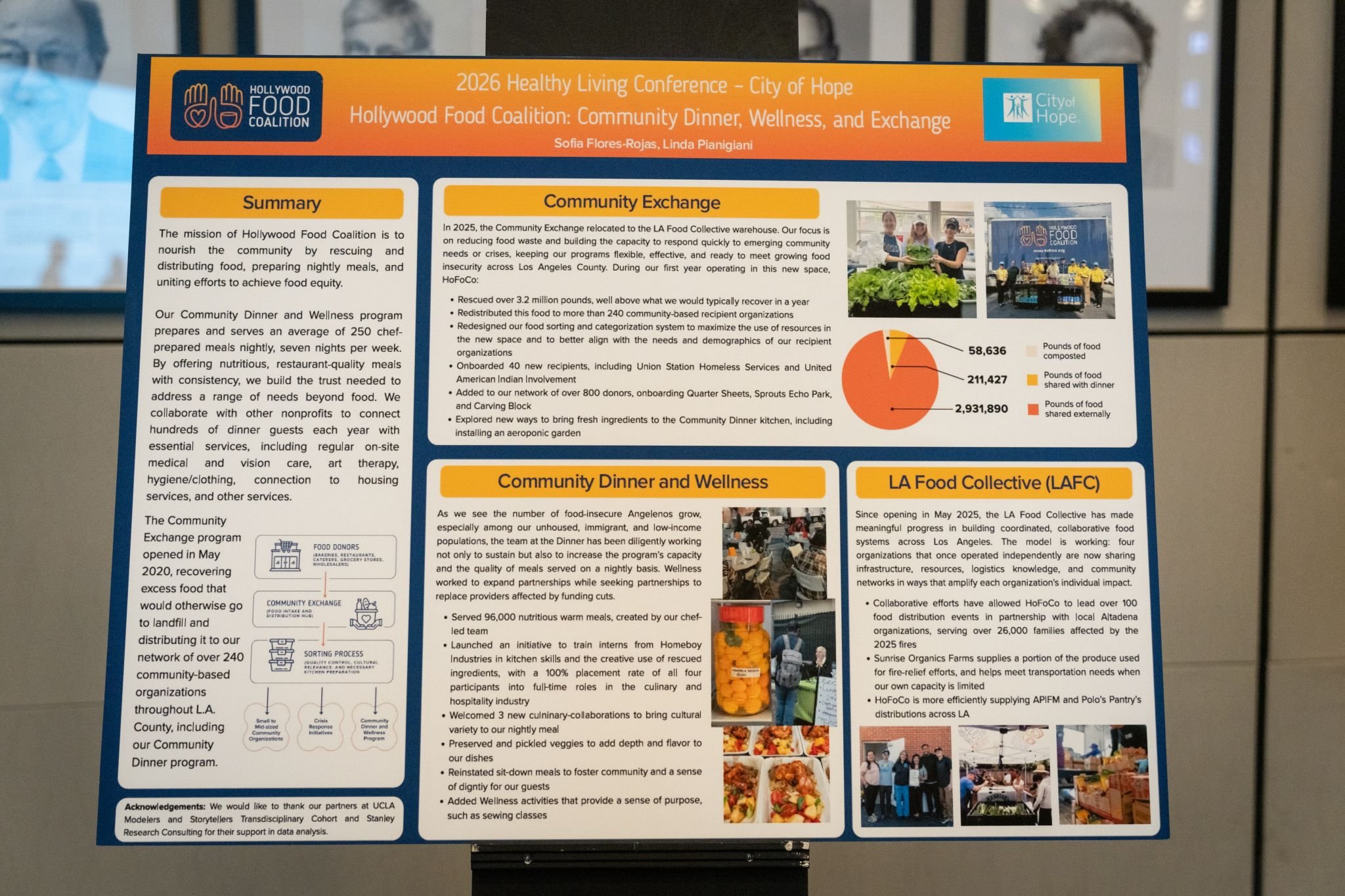
Healthy Living Grant Conference
"I Don't Want To Think about Survival in Los Angeles Without Hollywood Food Coalition"
By HoFoCo Guest
"I don't want to think about survival in Los Angeles without Hollywood Food Coalition"
So said Zahlia, one of the hundreds of poor, struggling and homeless Angelenos who daily depend on the Hollywood Food Coalition's life-sustaining dinners.
Although they fill primary human needs, the dinners are just one component of the Coalition's services offered free of charge to all who arrive at its 5939 Hollywood Boulevard site. Every week, on Wednesday evening, Zahila and an escalating number of others queue up and connect to a wide variety of other kinds of assistance designed to help them navigate this city's rocky financial terrain.
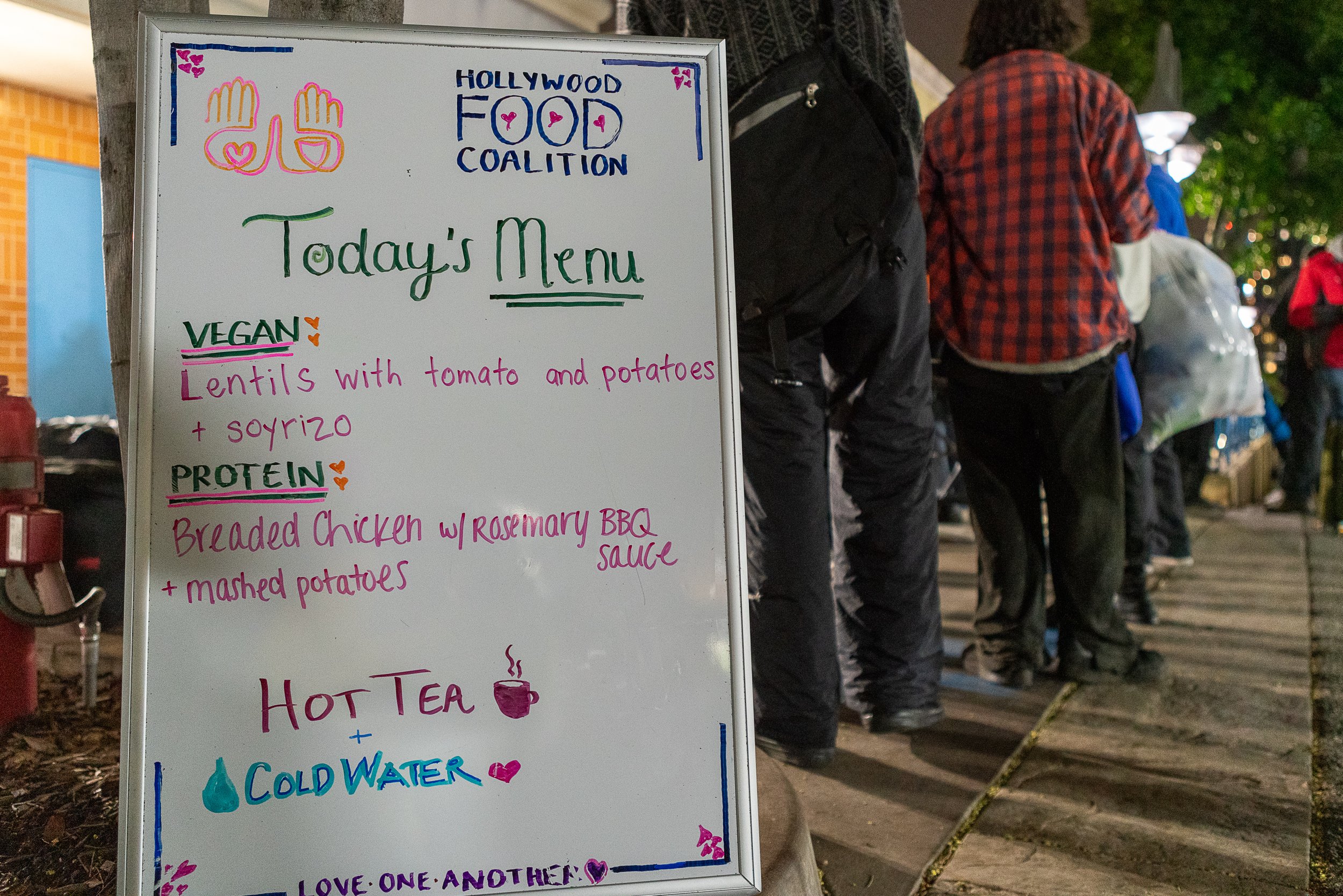
All recipients know--or hear from others in need--that neither driving rain, bitter cold, nor blustery winds deter the indefatigable cadre of volunteers who serve the dinners from Monday to Friday from 6:30 p.m. to 7:30 pm. The dinners usually center around a choice of fish, chicken, or vegan entrees. Water always accompanies the dinners. Fruit juices and milk, often donated by one or more of the Coalition's 500 partners, are served as well, along with fresh fruit, salads and/or pastries.
Zahlia, a youthful, trim 43-year-old, is Trans, black, "Scientific" Jewish and homeless. For two years, Zahlia, multi-skilled and talented in several dimensions, has lived, unhoused, somewhere in this city.
“Trying to live without HoFoCo's dinners and other benefits, she said, would "cause major panic attacks that would add another layer of stress to her clinical depression."
During our chat in the Hollywood branch of the Los Angeles Public Library, she Googled "clinical depression," also known as "major depressive disorder."
"Clinical Depression," according to the description she found, "is a major mental disorder that can cause a persistent feeling of sadness and loss of interest in activities. It also affects how one thinks, feels and behaves. The disorder can also lead to a variety of physical and emotional problems."
For Zahila, HoFoCo's dinners and key, life-sustaining services ward off these attacks and, along with medication, help to keep her on an even keel. "I honestly rely on the Coalition and many of us (the homeless), do,” she said.
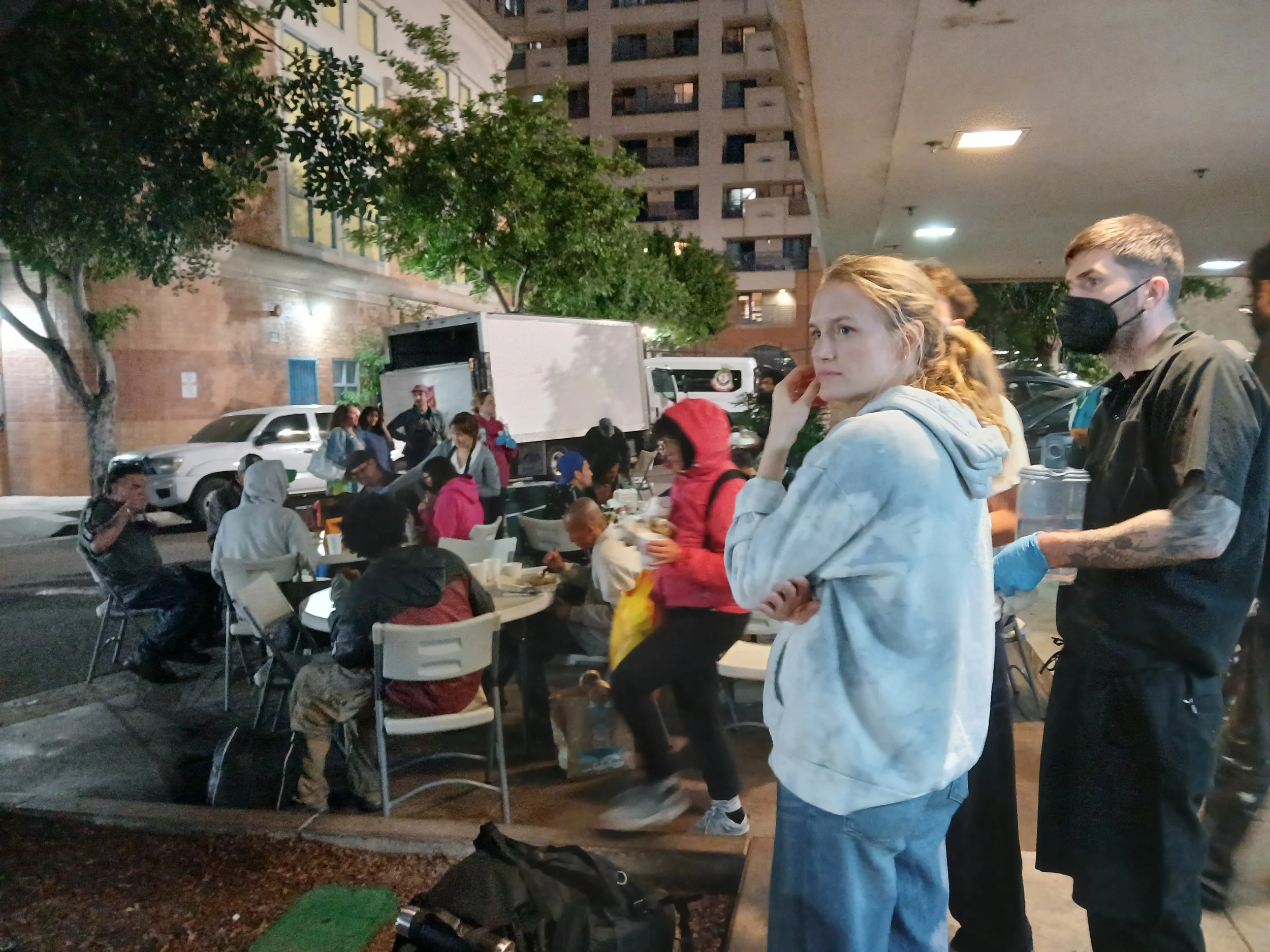
"Every day, she continued, "I look forward to these dinners and feel so much better afterward because they contain the nutrients I need and are always full of protein."
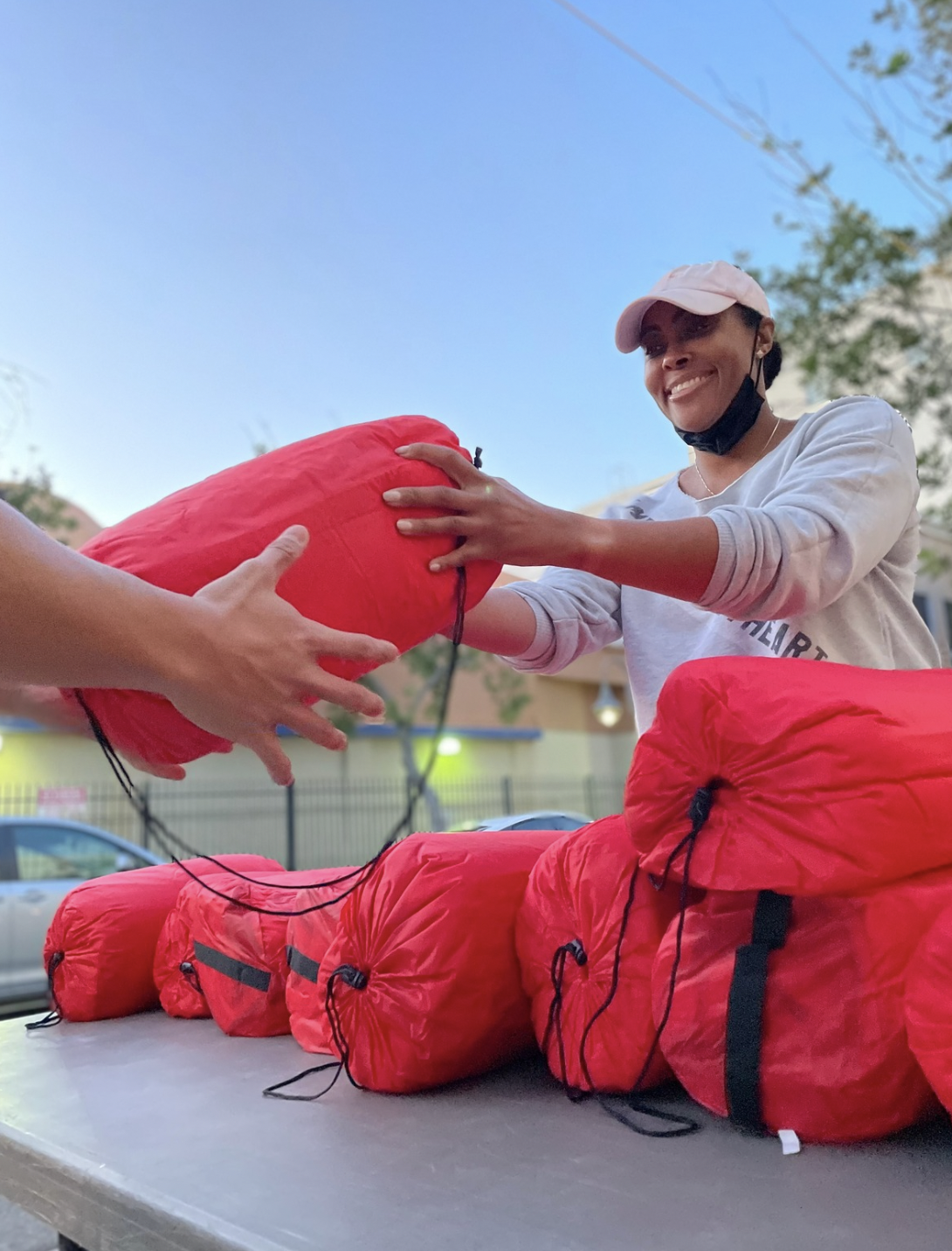
HoFoCo also provides new and lightly used clothing, shoes, hygiene kits and other essential items to lift the quality of life for the least, the lost and the forgotten.
"The Coalition helps immensely with transportation and clothing. Every Wednesday, I can rely on getting bus passes and, possibly, very good, almost new, clothing. There is always some sort of clothing to grab, even on the other days of the week."
Although she is deeply grateful for the dinners, bus passes, and clothing, "I want to mention my (appreciation) for the huge ticket cleared for me by the Homeless Peoples Court. Their lawyers come every week to provide free legal assistance and referrals."
Zahlia craves full-time employment but is not able to work. A small group of adults who are employed, but lack wages that would support the area's exorbitant housing costs, also depend on HoFoCo's dinners and resources, almost as much as Zahlia
Like Zahlia, they are neat and clean in appearance and thus defy the common, shop-worn tropes employed to justify thwarting the upward progression and mobility of the poor and struggling.
Zahlia, though unable to work, looks forward to one day having the ability to do so. Meanwhile, she is also grateful for HoFoCo's social environment, in which staff make no obtrusive judgments about clients, based on race and/or sexual preferences.
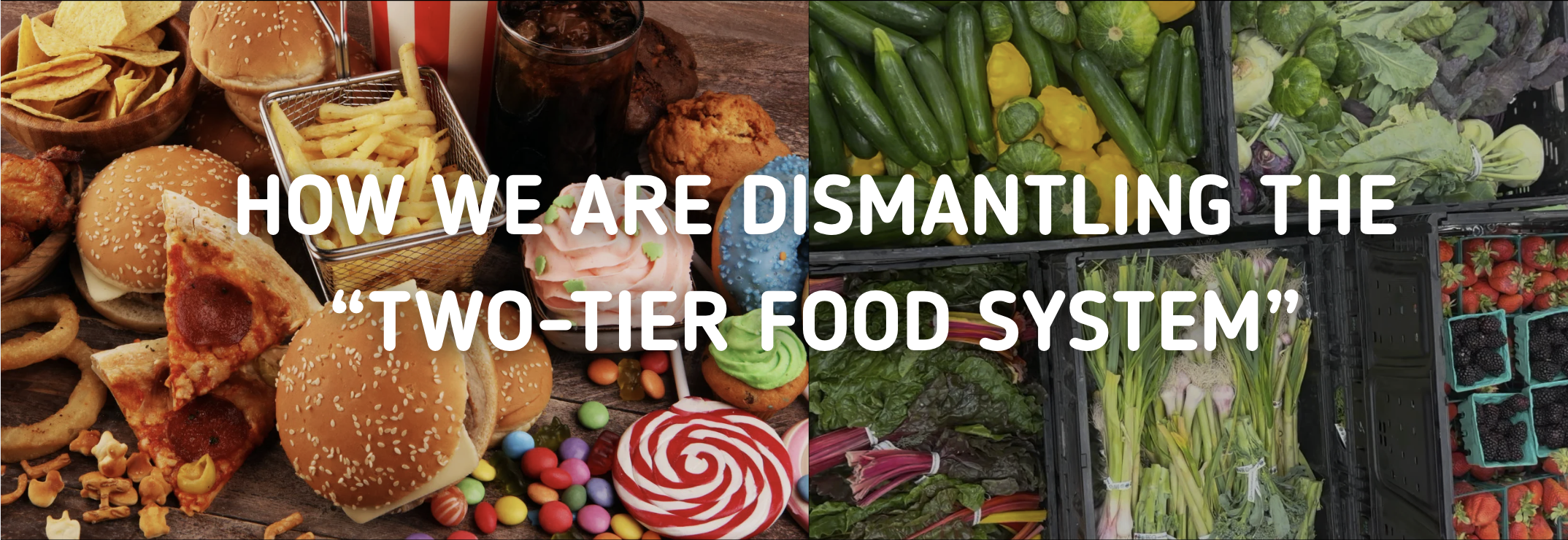
Nourishment isn't just about having access to food - it's about having access to quality, fresh, and culturally relevant food. A recent study by Yuka and Harvard Law School's Food Law and Policy Clinic found a troubling reality:
“lower-priced products contain significantly more additives, sugar, and salt, exposing a two-tier food system where access to healthier products is largely reserved for those who can afford them.”*
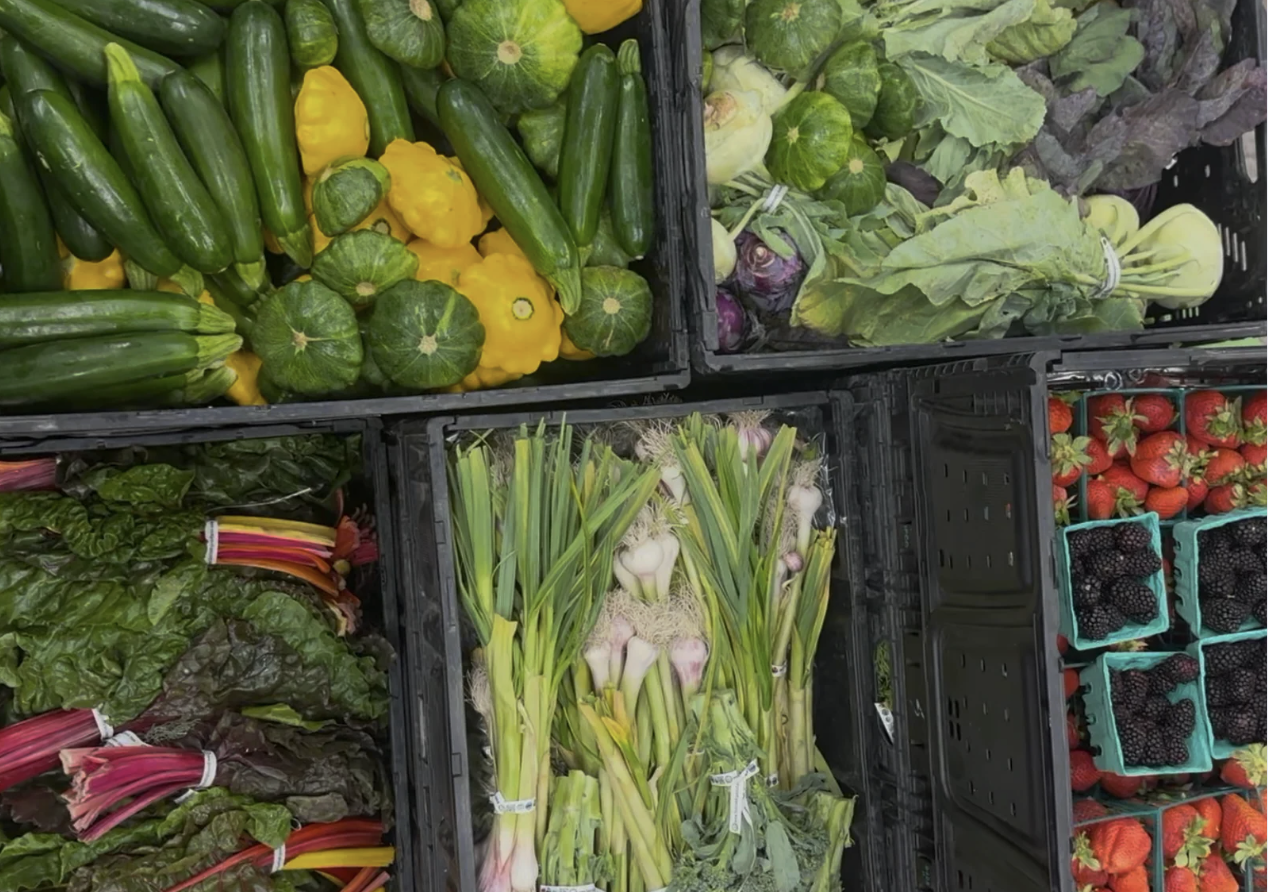
When every dollar counts, people are often forced to choose affordability over nutrition and choose the cheaper option, even when it means sacrificing quality. At HoFoCo, no one has to make that trade-off because quality is one of our core values. Our Dinner and Wellness program serves chef-prepared balanced meals designed not just to feed, but to truly nourish. At our Exchange, we make fresh fruits and vegetables accessible by working with business donors and recipient organizations to distribute directly to their communities.
Federal food assistance programs are facing mounting threats, and the uncertainty is far from over. Beginning on June 1st, CalFresh/SNAP employment requirements were constrained, potentially excluding 260,000 Angelenos from receiving food assistance.** The Market Match program, which allows CalFresh recipients to double their spending on produce at farmer markets, expanded access to fresh food for 627,000 people in California last year, but could disappear by next spring.***
If these programs are cut, Hollywood Food Coalition will be here. We have the network, the infrastructure, and the relationships to respond quickly when resources fall short and communities are left without support. In a “two-tier food system” that caters to those who can afford healthier options, losing programs like Market Match only widens that gap, and we refuse to accept that. We will keep showing up to ensure that quality, nourishing food remains within reach for everyone.
The work doesn't stop, and neither do we. Neither does our community. Your continued support is what keeps this work going. Join our Supper Club as a monthly supporter today and stand with the people who need us most, ensuring Hollywood Food Coalition can keep showing up every week, every meal, every crisis, no matter what comes next.
WHY I’M HERE: THE MEAL THAT MATTERS MOST
My vision blurred without warning. Headaches lingered longer each day. Words sometimes slipped just beyond reach. A quiet certainty grew inside me that something was wrong in a way I couldn’t work through or outlast.
One night at home, I turned toward my wife, ready to tell her I was scared that my body no longer felt like my own.
The words never came.
Everything shut off.
My body seized before I understood what was happening. She caught me as I fell, her arms wrapping around me before my head struck the floor. She saved me without hesitation, calling the ambulance while I disappeared somewhere beyond awareness.
I remember nothing of the ride to the hospital, only flashes told back to me later: lights, voices, urgency. Because of COVID, she wasn’t allowed into the hospital. She watched me being taken away and waited alone at home, suspended between hope and terror, unable to see me or know if I would come back. I was sedated for a week.
When I finally woke, the world felt distant, unreal. Doctors spoke carefully, choosing their words with precision. There was a mass in my brain. They avoided certainty. Terms like tumor and abnormal growth filled the room. Brain cancer was suspected, but confirmation would require a biopsy and brain surgery.
Nothing was final yet. But everything had already changed. I left the hospital living in the space between possibility and diagnosis, where fear fills every silence. Time was no longer measured in days but in scans, appointments, and waiting.
In kitchens, problems have solutions. Mistakes can be corrected, dishes remade, service recovered. This was different. There was nothing to fix with effort or skill. No discipline strong enough to control what might already be growing inside my head.
All I could do was wait. And the waiting became its own kind of suffering. After almost exactly two years of surgeries, hospitalizations, chemotherapy, radiation, and the ever-rotating cast of doctors and tests, this phase of my brain cancer treatment finally came to an end.
During that time, everything else in my life had stopped. I lived in a bubble, watching the world move on without me. From hospital beds and the quiet of my home, I watched friends in the hospitality industry struggle through layoffs and closures during the COVID-19 pandemic. I watched communities and families endure lockdowns and uncertainty. I watched friends and colleagues lose restaurants, places they had poured their blood, sweat, and tears into, dreams they had spent their entire lives building.
The industry changed. And so did I. Somewhere along the way, I knew that whatever time I had, I wanted it to matter. I wanted to make a difference. I wanted to be of service. But knowing that and knowing how are very different things.
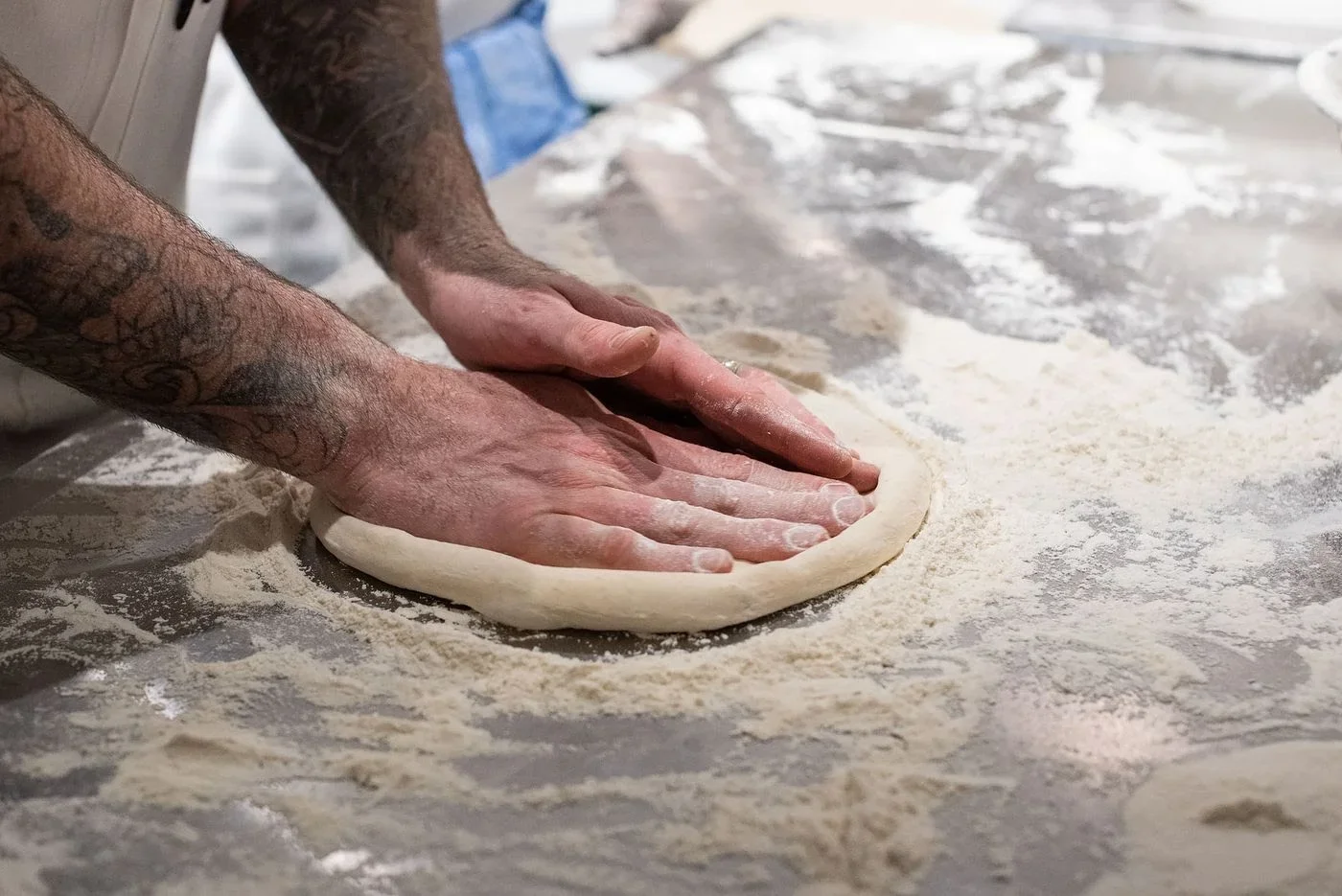
I searched for the right path and couldn’t find it. I knew the kind of work I wanted to do, but I didn’t know where I fit or what shape that purpose would take. Eventually, I drifted back into the industry I had worked in since high school. It was familiar. Practical. Safe.
The night before I was meant to sign a contract with another hotel group, something stopped me. I decided to look one last time not for the job that paid the bills, but for the work that meant something.
When I began searching again, I knew something in me had changed. I wasn’t just looking for a position. I was looking for purpose. I wanted whatever time I had to matter. I wanted to make a difference in the city I love so much, the city where both my parents grew up, went to school, and fell in love.
The city where my story began. The city where I was born. I searched in Hollywood, where my dad grew up and went to high school. And there, in a job listing, a small paragraph caught my attention. It mentioned the book Bread Is Gold, by Italian chef Massimo Bottura. It described an organization built on the philosophy of rescued food, preventing waste, honoring ingredients, and transforming whatever they had into hot meals for people in need.
It wasn’t written like a typical job description. It reads more like a belief system. A way of seeing food not as a product, but as a possibility. Not as surplus, but as responsibility.
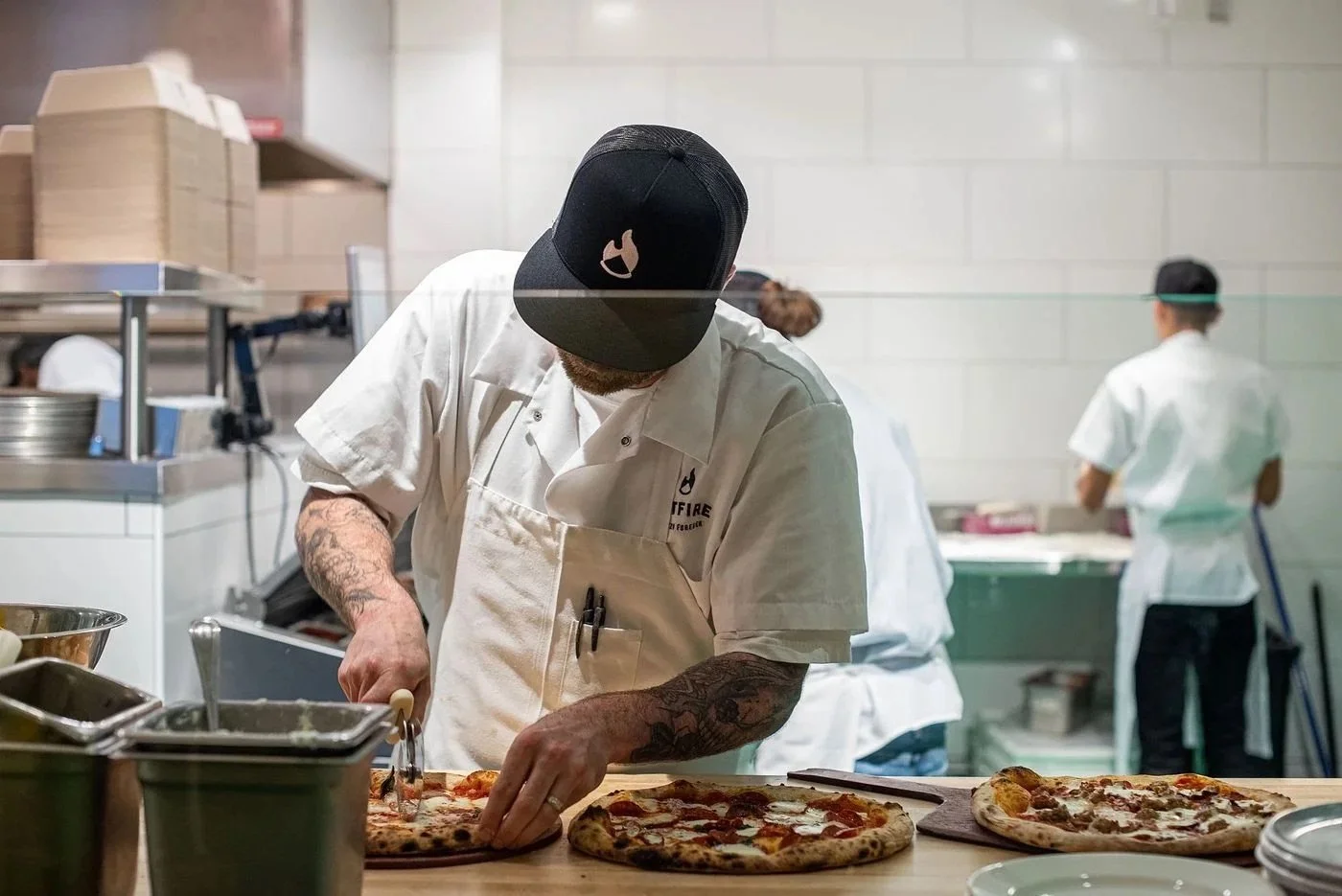
I knew nothing about the organization. But something in me recognized it immediately.
This wasn’t just a job. This was alignment. I knew immediately, “This is where I want to be, this is where I might be able to make a difference.”
The reason I’m here, not working somewhere else, not chasing another star, not standing on another line, is because I believe I can make a difference here. We can share ideas here. We can build something better here. I didn’t want to spend my time chasing perfection on another plate. I wanted my work to matter in a different way.
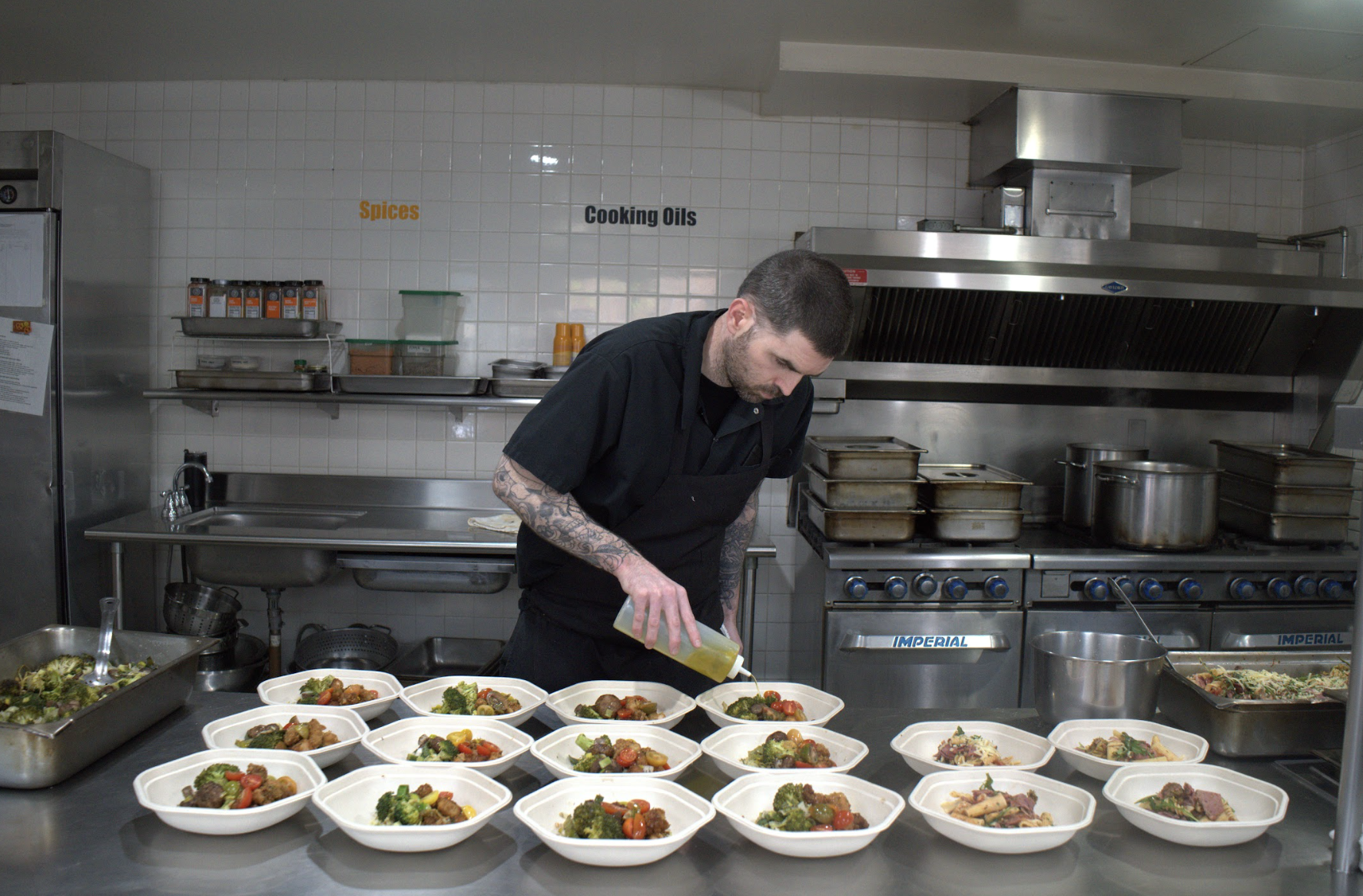
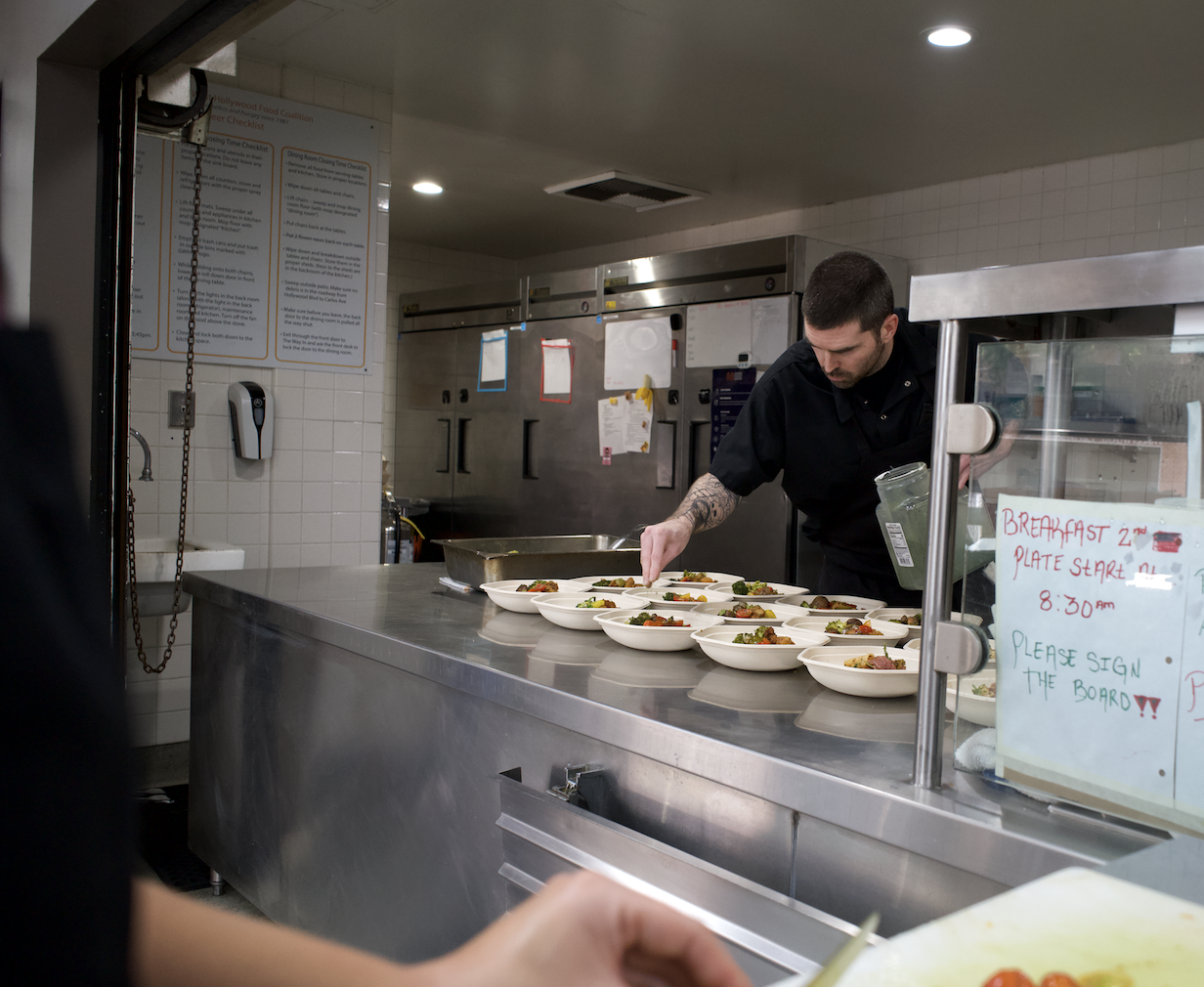
When I first stepped into the kitchen at Hollywood Food Coalition, I felt completely out of place. I showed up in my chef whites, with my gear and my knife roll. I was prepared for structure, hierarchy, order. Instead, it looked like complete chaos. No designated stations. No tickets. Music blasting. No clear command. For the first time in years, I felt like the fucking new guy and I hadn’t felt that in a very long time. I was lost in the noise and movement.
From that moment on, I understood that this kitchen didn’t run on control, it ran on trust. Trust in instinct. Trust in creativity. Trust that whatever arrived that day, dented boxes, bruised produce, day-old bread, surplus trays, mystery donations that could be transformed into something meaningful.
There were no guarantees here. No standing orders. No perfectly crafted menus planned weeks or months in advance. Just ingredients that needed a second chance and people who needed a meal.
I had spent my career learning how to execute precision. Here, I had to learn how to listen to the food, to the moment, to the need in front of me.
Cooking without certainty was uncomfortable at first. It stripped away the safety nets I didn’t even realize I depended on. No reaching for exactly what I wanted. No replacing what ran out. No perfectionism disguised as professionalism. Instead, there was adaptation. Improvisation. Humility.
And something else I hadn’t expected - freedom.
Freedom from the idea that food had to be flawless to matter.
Freedom from waste.
Freedom from ego.
Every day became an act of problem-solving and care. What can we make from what we have? How do we stretch this so everyone eats? How do we make something nourishing, dignified, and delicious from what others overlooked or discarded?
It changed the way I saw ingredients.
It changed the way I saw cooking.
It changed the way I saw service.
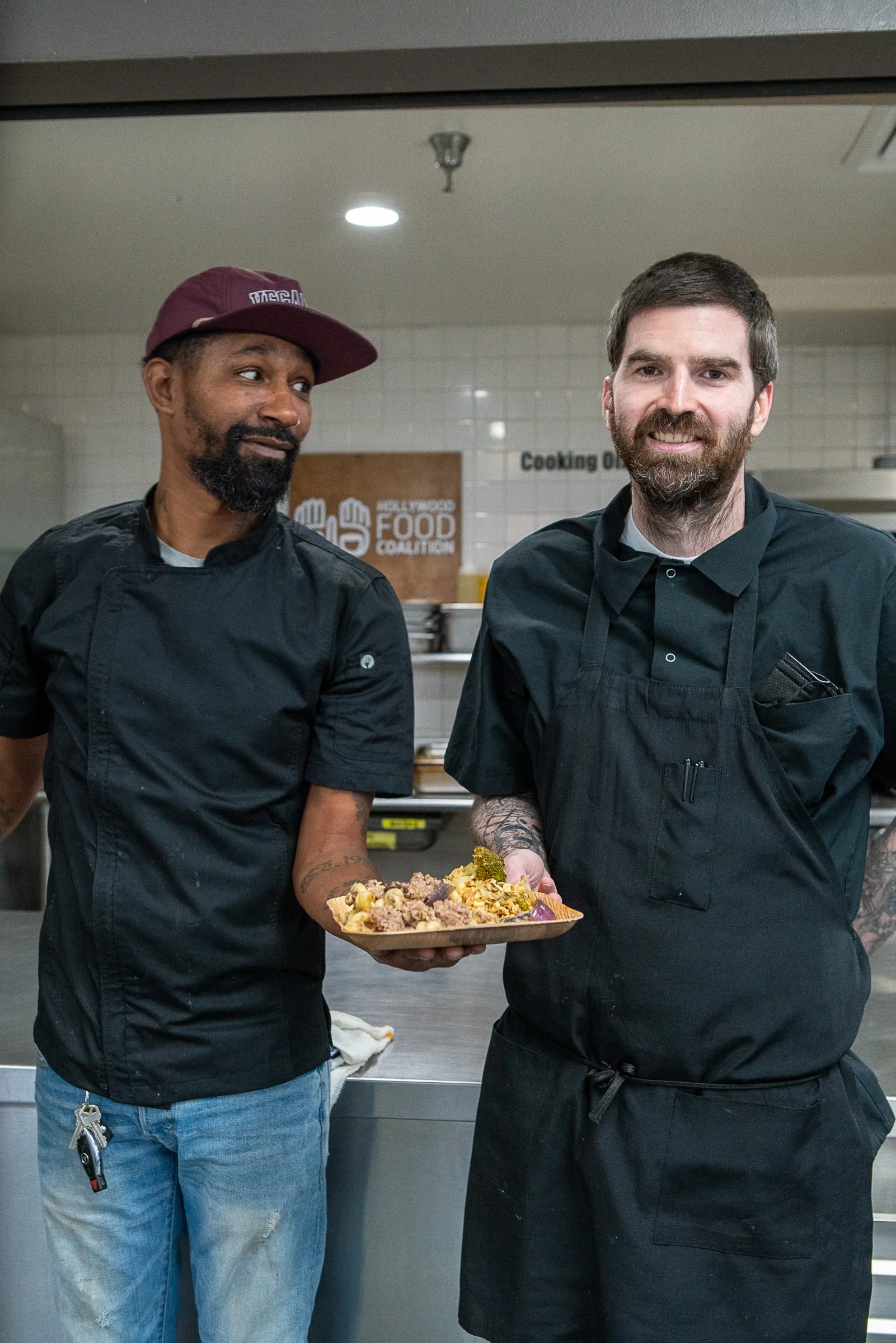
In fine dining, we chase perfection for the guest who chose to be there. Here, we cooked with urgency and intention for people who needed to be there. The stakes felt different. Heavier. More human.
And slowly, without realizing it, I was changing too.
The discipline that carried me through treatment - endurance, resilience, adaptation - found a new home in this kitchen. Survival had taught me how to keep going when things were uncertain. This work taught me how to turn uncertainty into purpose.
I hadn’t just found a job.I had found alignment. A place where resourcefulness was valued more than control. Where service meant showing up fully, not just executing perfectly.
Where nourishment was measured not only in flavor, but in dignity. For two years, my life had been about staying alive. Now, it was about helping others live - one meal at a time.
And for the first time since everything had stopped…I was moving forward again.
“I need a sauce for the chicken on the fly! We’re almost out of cabbage! You look so uptight!” A regular volunteer pointed it out to me.
My brain snapped into gear like it always had. I set down my knife roll and started building a station. Over the music, someone yelled, “Hurry, we don’t have time, service is in a couple of hours!”
Relief washed over me, familiar pressure, familiar urgency. I was home. I knew what to do. I had lived this moment countless times before.
I walked to the pantry to gather ingredients and vegetables.
There was nothing.
No prep lists. No stocked shelves. No certainty waiting behind stainless steel doors. Just empty space.
My head began to spin. In the kitchens I came from, not knowing was dangerous. Weakness was exposed quickly, and incompetence was cut without hesitation. Survival meant having answers before questions were asked. Still, I spoke.
“Excuse me, Chef…”
She stopped me.
“I’m not the chef. I’m just a volunteer. So… what’s the sauce? And what about the vegetables?”
And suddenly, I understood.
This wasn’t a kitchen built on control or perfection. There were no guarantees here, only people showing up, doing their best with whatever was available, determined to feed someone who needed it. The chaos wasn’t failure. It was for a purpose.
Standing there, staring at empty shelves, I recognized something familiar. Cancer had already stripped away my illusion of control. My body had failed in ways skill and discipline couldn’t fix. The certainty I once depended on disappeared overnight.
Now I was here again, without guarantees, without abundance, without a script. But this time, I wasn’t afraid. This kitchen didn’t ask me to be perfect. It asked me to be present.
I realized I was exactly where I needed to be.
Hollywood Food Coalition was the beautiful chaos I had been searching for: a place where nourishment mattered more than ego, where showing up mattered more than being right, and where healing looked less like recovery and more like service.
Cancer took away the life I thought defined me. This kitchen helped me discover the one that truly did.
I work with a ragtag crew, incredible volunteers, and dedicated board members and directors. Executives that I can actually engage with beyond P&L statements and budget presentations. We talk about people. We talk about impact. We talk about what matters.
I get to engage with our guests, really engage. I get to know their stories, their struggles, their preferences, their humor, and their honesty. Even though the food is free and no checks are dropped at the table, they are just as critical of my menu and cooking as any food critic I’ve ever faced. They tell me when my techniques are weak. And they are deeply grateful when they enjoy the food.
There is no longer pressure for awards or accolades.
But the chef inside me never left.
That voice still says I can do better. Work faster. Work harder. Work cleaner. It still tells me I’m not good enough, and it still pushes me forward. It always will.
Because we can always do better.
Our guests deserve the best we can offer, even with limited resources and rescued ingredients. They deserve care, intention, and pride in every meal we serve.
They deserve the best.
Because a person in need of a hot meal deserves that just as much, if not more, than someone sitting down for a three-Michelin-star dinner.
And that is why I’m here. Even when it feels, at times, like I’m screaming into the void.
Break Bread with US!
Want to write an article for our blog or have an idea you would like us to explore? Share it with us!